LEOS Protection One Step Closer to Securing Overtime Pay for Secret Service
LEOS Protection membership helps employees punch far above their weight...
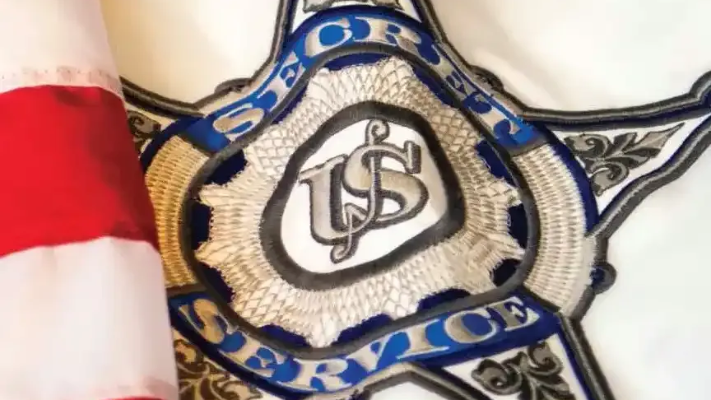
The Federal News Network ran a story on our 9 year fight to obtain overtime pay for Secret Service Agents. The U.S. Court of Federal Claims, in an Oct. 29 ruling, denied the Secret Service’s motion for summary judgment in the case.
FROM THE ARTICE:
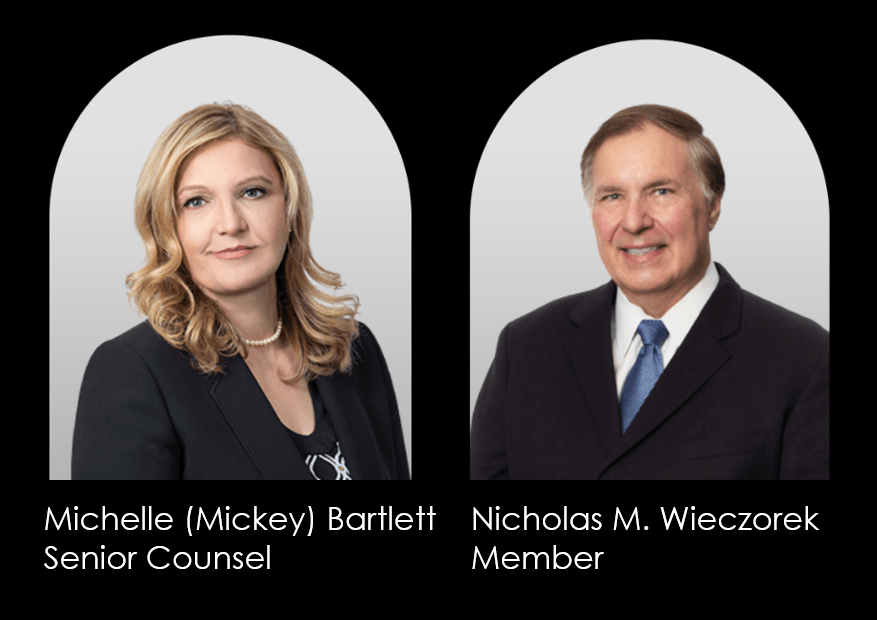
Nicholas Wieczorek, a partner at Clark Hill representing Secret Service agents in the lawsuit, said the motion, if granted, would allow additional Secret Service members to assert their own claims of unpaid overtime.
“We think, under the rules, class action status is the way to go because all of these agents are affected by the same statute, same pay regulation, same working conditions, same conditions of employment. So they are numerous and common, with respect to the issues,” Wieczorek said.
If the court grants the motion for class certification and the case goes to trial, Wieczorek said it would mark the beginning of the end for this drawn-out legal battle.
“If the court rules appropriately and positively on the class certification issue, we will at least see light at the end of this tunnel, in terms of getting the case concluded for the class members,” he said. “The financial analysis is complicated and broad, but it’s not legally complex, so it’s number-crunching and coming up with calculations of who was affected and what amount.”
The latest development in this lawsuit comes at a time of heavy scrutiny for the Secret Service.
Its permanent director stepped down in July, following the first of two attempted assassinations of President-elect Donald Trump during the presidential campaign.
A White House-commissioned report released last month found evidence of a “do more with less” culture at the Secret Service that may have resulted in burnout among agents and contributed to the agency’s security failures leading up to a July 13 assassination attempt at a Trump campaign rally in Butler, Pennsylvania.
Wieczorek said the long-standing overtime dispute also ties back to workplace morale.
“It doesn’t help morale if an employer is not paying the employees the money they are due for the work they perform,” he said. “In any working environment, if you’re not being paid for the work you do, you are not going to be highly motivated, or your morale is not going to be as [high] as it could be.”
The lawsuit focuses on Secret Service agents assigned to protective details of politicians, dignitaries and elected officials.
The lawsuit, first filed in 2015, originally challenged an Office of Personnel Management policy that Secret Service agents had to work two consecutive hours of unscheduled extra duty to receive overtime pay.
But in Horvath v. United States, another case where a Secret Service agent claimed he wasn’t paid the amount of overtime he was owed, the U.S. Court of Appeals for the Federal Circuit overturned that OPM policy in 2018.
The Secret Service updated its pay policies to comply with the appeals court’s decision.
But six years after that ruling, plaintiffs in Naltner v. United States say the agency still hasn’t compensated more than 1,800 agents it estimates worked split-overtime hours in recent years.
Wieczorek said a class-action lawsuit, if granted, would cover even more current and former Secret Service personnel than that.
“It’s in the thousands, I’m quite sure,” Wieczorek said. One of the plaintiffs, he added, estimates the agency owes him $25,000 to $30,000 in unpaid overtime.
In addition to their base pay and standard overtime, Secret Service special agents are generally eligible to earn a Law Enforcement Availability Pay (LEAP) enhancement — a 25% pay enhancement added on top of their base salary each pay period, as long as they average two extra hours of work each day over the course of a year.
“Put another way, LEAP compensates special agents for the unscheduled overtime (i.e., being asked to start a shift early or stay late) that is part and parcel of serving as a special agent,” court documents state.
For example, a Secret Service special agent working a 12-hour shift with no unscheduled overtime would receive eight hours of their base salary, plus two hours of LEAP premium pay, and two hours of hourly pay at the overtime rate of 1.5 times their basic pay rate.
Special agents who work protective duties receive weekly schedules outlining their assignments — including scheduled overtime.
Not including overtime hours, the Secret Service typically schedules agents for eight-hour, 10-hour and 12-hour shifts. All hours beyond the eight-hour mark are deemed “scheduled in advance.”
However, the Secret Service may modify an agent’s schedule after the workweek has begun if operational needs require more overtime than previously anticipated. Any additional overtime hours added to these “red-pen schedules” are considered unscheduled overtime.
Secret Service agents face caps on their total compensation each pay period and calendar year.
Including overtime and premium pay, their aggregate pay cannot exceed the greater of these two categories — the basic pay for GS-15 level employees (including locality pay), Level V of the Executive Schedule, which is currently $180,000.
Special agents can still be assigned overtime hours, even if they have received their pay cap for a given pay period or year.
In 2016, Congress passed the Overtime Pay for Protective Services Act to raise those pay caps. Lawmakers passed another bill in January this year that will extend those pay caps through 2028.
In 2017, more than 1,000 Secret Service agents tasked with protecting Trump and his family hit their pay cap for the year.